A Brief History of Spices
Spices and herbs played a dramatic role in the development of Western civilization.
Believe it or not, the earliest records of the use of the spice, sesame seeds, come from Assyrian myths. The myth says that the gods drank sesame wine the night before they created the Earth.
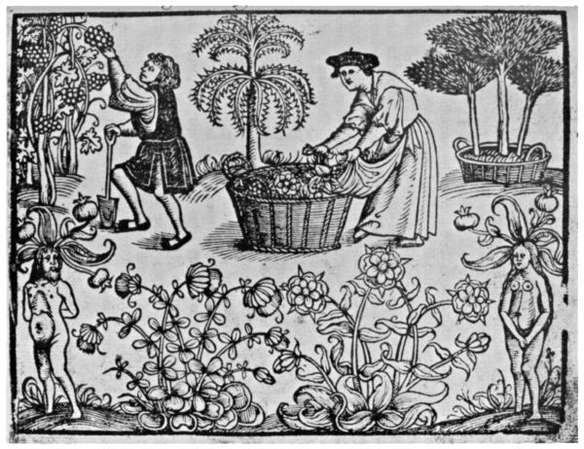
The first real evidence of the use of spices comes from the records and artwork of early civilizations. Hieroglyphs in the Great Pyramid of Giza show workers eating onions and garlic for strength. In the Book of Genesis, Joseph's older brothers sold him to a passing caravan of spice traders traveling to Egypt. Later, in the Book of Kings, the Queen of Sheba paid tribute to King Solomon in the form of spices, gold, and precious stones.
Antiquity
In 1453 B. C. the first Greek Olympians celebrated their victory wearing crowns made of laurel and parsley. About 400 years B. C., Hippocrates, the Greek physician, listed more than 400 medicinal preparations made from spices and herbs, and almost half of them are still in use.
The "Golden Road of Samarkand" was an extensive spice route that stretched across the deserts of the South Asian and Middle Eastern empires. For centuries, the Arabs controlled it and made fortunes on it by brokering the trade of local products from Africa and spices from the Far East. Caravans of donkeys, and only later thousands of camels, passed through this road carrying products that were in demand from faraway regions.
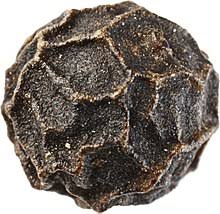
As the Roman Empire later came to dominate, the Romans began sailing from Egypt to India to trade spices. It was an arduous two-year journey across the Indian Ocean to procure pepper, cinnamon, nutmeg, cloves and ginger.
 By the first century, the Greek merchant mariner Hippalus noted that the changing monsoon wind blows from the southwest from April to August and from the northeast from August to April. Instead of fighting the wind, traders began to make better use of it and thus shortened the journey to less than a year.
During the Roman Empire, spices were only available to the upper classes who valued them literally like pure gold. In the year 65, to pay their respects at the funeral of Nero's wife, the Romans burned a year's supply of cinnamon.
In the year 410 the Goths conquered Rome, and their king, Alaric I, demanded 15 tons of pepper along with gold, silk, and precious stones to spare the Roman population from death.
After the fall of the Roman Empire, the use and trade of spices decreased significantly.
The Middle Ages
As European culture developed in the Middle Ages, the demand for spices was key to the expansion of world trade. Many of the world's most prized spices came from China, India and Indonesia, including the Maluku Islands, also known as the Spice Islands. Europeans traded spices directly with Eastern cultures, while at the same time explorers discovered new worlds and trade routes.
In the second half of the 13th century, Marco Polo's Asian explorations elevated Venice to the most important trading port, and as such Venice prospered until 1498.
About the same time, the prices of spices were so high for the Portuguese and Spanish that they began to explore and find their own routes to the spice-rich islands.
Portuguese explorer Vasco De Gama sailed around Africa's Cape of Good Hope to reach Calcutta in India. He returned with pepper, cinnamon, ginger, precious stones and an offer from an Indian princess to continue the trade. 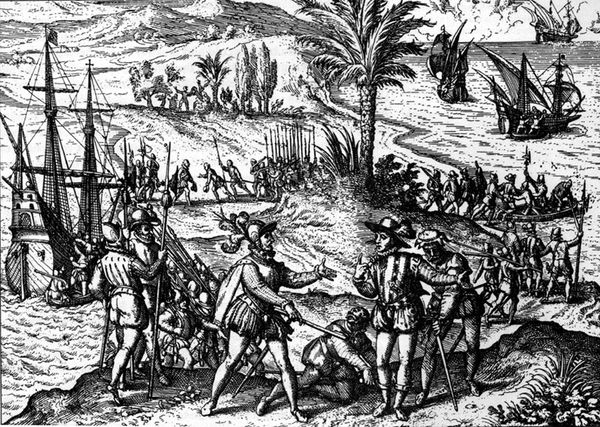
The Modern Era
In 1492 Christopher Columbus arrived in America in search of the Moluccas. Although he did not find them, Columbus returned to his sponsors in Spain with pimento, vanilla and red pepper (chili) that he found on the Caribbean Islands.
As the middle class rose during the Renaissance, so did the popularity of spices. There was a conflict over the management of this very lucrative trade. Wars broke out between the growing European nations over the Indonesian Moluccas and continued for the next 200 years. The Spanish, Portuguese, British and Dutch all fought for control between the 15th and 17th centuries.
Europe
The Portuguese came to the East by sailing around Africa and across the Indian Ocean. Their Spanish rivals looked for another route to regions rich in spices.
In 1519 The Spanish sent Ferdinand Magellan westward to circumnavigate the globe. Magellan died in the Philippines, and his crew lost four of their five ships. Nevertheless, the ship that survived managed to bring with it so much pepper and other spices that the voyage was a financial success.
Meanwhile, the Dutch began to prosper by supplying the Portuguese with ships and crews. At the beginning of the 16th century, the Dutch took control of supply and trade in Northern Europe. By the end of the century, their influence had expanded, and they stepped into the spice trade, taking control from the Portuguese.
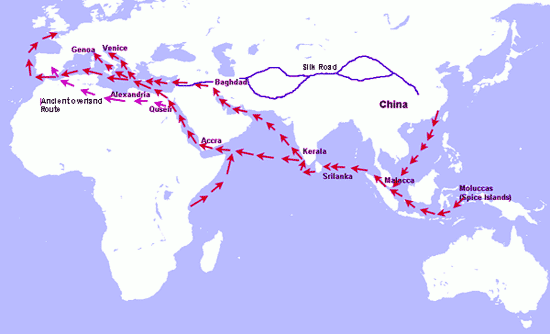
They had many expeditions to the Indian subcontinent, Southeast Asia and Oceania where they negotiated new deals with local rulers.
Until the first half of the 17th century, the Dutch had complete control. The Netherlands conquered the city of Malacca in 1641. This campaign also brought them control of the Malay Peninsula and surrounding islands.
In 1658 they established control over the cinnamon trade in Sri Lanka (then Ceylon), and in 1663 they acquired exclusive trading rights over the ports known for their pepper along the Malabar coast in western India.
By the end of the 17th century, some other islands fell under Dutch control, which enabled them to have complete control over the Asian spice trade.
When the prices of spices began to fall, the Dutch tried to artificially keep prices high by burning cinnamon forests, and they soaked nutmegs in acidic solutions because they prevented the further growth of the seeds, i.e. their further cultivation.
France was a great power in the 17th century, but they didn't play a big role in the development of trade because they didn't invest in exploring areas rich in spices. Despite this, the French helped reduce the Dutch market share. They stole enough cloves, cinnamon and untreated nutmegs from the Dutch and started planting them on the Indian Ocean islands that were under French control.
During the 1500s, the English were looking for a Northern passage to the East. They did not find it until 1600. By royal charter, Elizabeth I granted the East India Company, founded by merchants, exclusive rights to trade with India for 15 years. History has shown that this company ruled India in the full sense of the word until its dissolution on January 1, 1874.
In 1780, the Dutch and the English fought a war over the spice trade that ended with the destruction of the Dutch East India Company. By 1799, the Dutch had lost all their eastern trading strongholds, and eventually the Dutch company was closed.
America
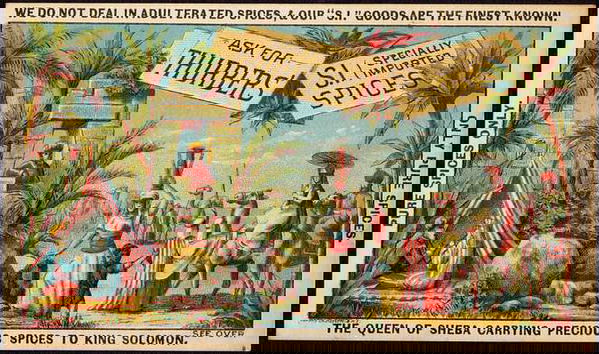 Americans joined the world race for spices in 1672. Elihu Yale from Boston, a former official of the British East India Company in Madras, India, started his own spice business. He accumulated a great fortune that he will use to found Yale University.
In 1797, Captain Jonathan Carnes sailed to Salem, Massachusetts from Indonesia with a large cargo of pepper. His way of doing business was directly with the Asian natives instead of with the European monopolies. The result of such trade led to Salem, Massachusetts, becoming the center of the spice trade in North America. The first trip yielded 700% profit and so the trade began.
Almost a thousand American ships went on a "round the world trip" in the next 90 years.
As American influence grew, Americans contributed more and more to the spice world. Texas settlers produced chili powder in 1835 as an easier way to prepare Mexican dishes. In 1889, researchers in Watsonville, California discovered a technique for dehydrating onions and garlic, and in 1906, Eugen Durkee wrote the first spice purity standard known as the “U.S. Pure Food and Drug Act”.
The World War II brought a great interest in international cuisine to America. As American soldiers returned home, they brought with them the love of food they encountered and ate in Europe and Asia.
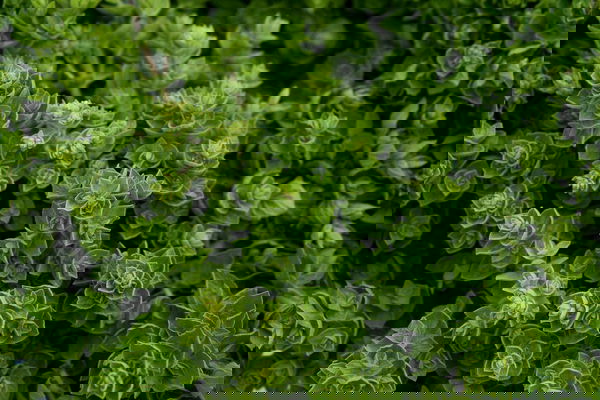
Oregano consumption increased 5200% in the first decade after the war.
Asia still produces most of the spices that once dominated the spice trade, including cinnamon, pepper, nutmeg, cloves, and ginger. However, more and more spices are being planted in the Western Hemisphere along with a wide variety of herbs and aromatic seeds.
Today, Brazil is one of the main players in the production of pepper, Grenada is the main producer of nutmeg, they also have nutmeg on the national flag. Ginger and the highest quality allspice are produced in Jamaica, while Nicaragua, El Salvador and the USA grow sesame. Europe and California produce many herbs, while Canada is known for aromatic seeds such as juniper.
Since the beginning of history, the most powerful nations have controlled the spice trade. The same can be seen today. Today, the USA is the largest buyer of spices, followed by Germany, Japan and France.
Latest Recipes
We bring you tried and tested recipes of our favorite dishes, culinary tips, and suggestions on how to best combine spices and ingredients for a complete sensory experience.
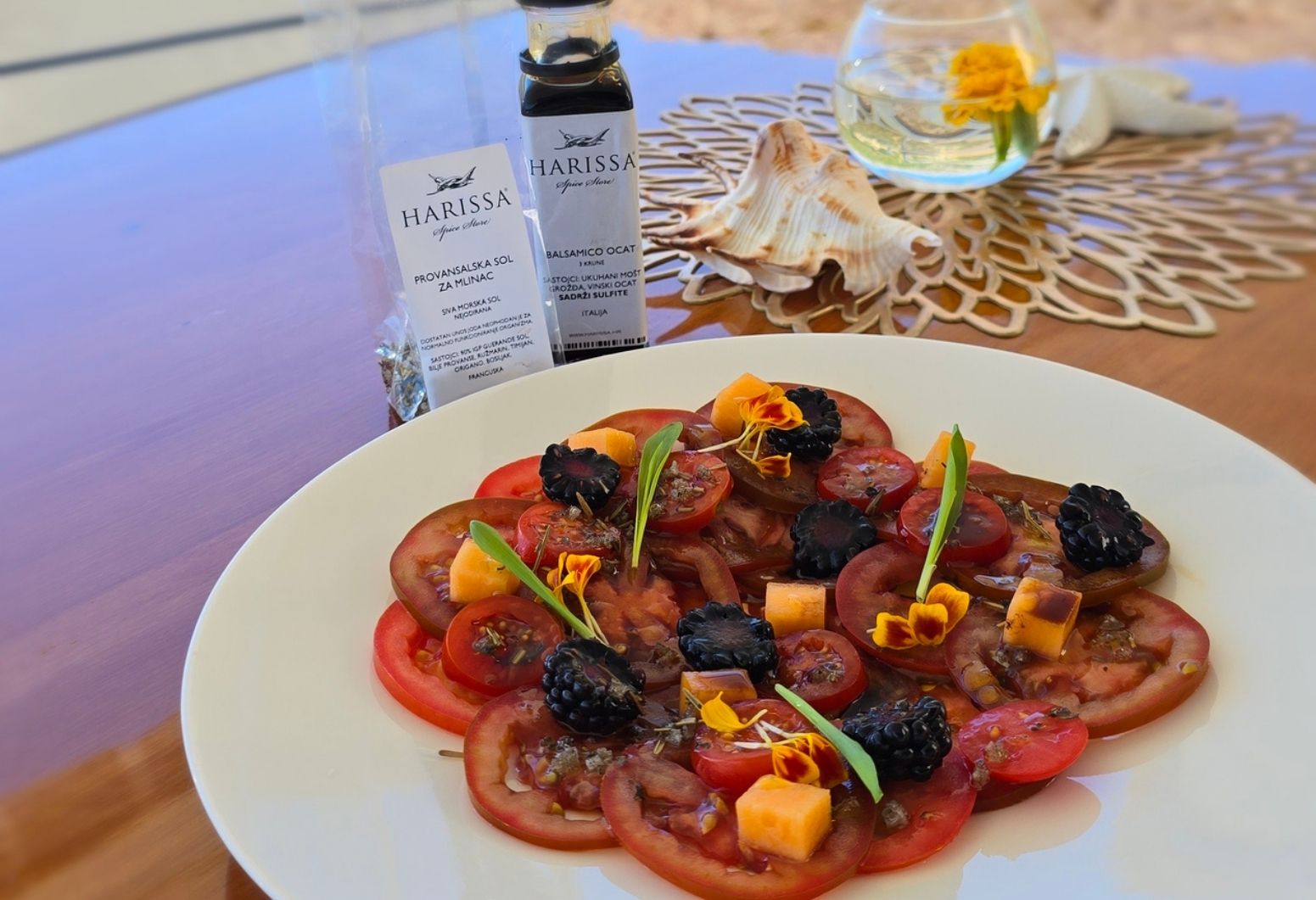
Summer Garden with Black Tomato, Melon, Black Raspberry and Harissa Provencal Salt
Summer Garden with Black Tomato
with Melon, Black Raspberry and Harissa Provençal Salt
Salad by Chef David Francesco Komadina